
The Future of B2C Digital Marketing: Strategies for Success in a Competitive Landscape

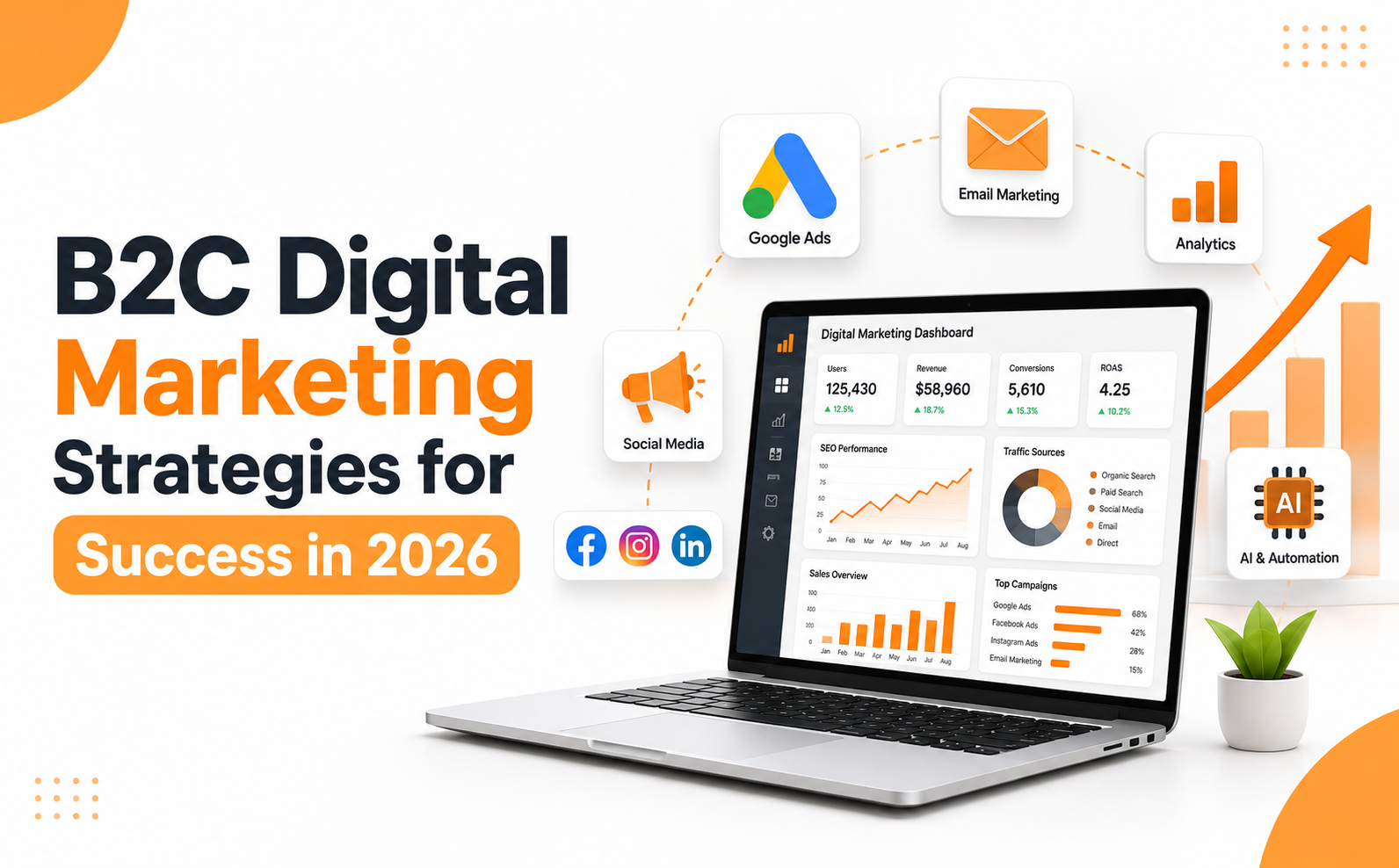
Consumer expectations are changing faster than ever, and businesses must adapt to remain competitive. From personalized shopping experiences to AI-powered recommendations, B2C Digital Marketing is evolving rapidly. Customers now expect brands to deliver relevant content, seamless online experiences, and instant communication across multiple digital channels.
Whether you run an eCommerce store, retail business, healthcare clinic, educational institute, or service-based company, having a strong digital marketing strategy is no longer optional—it’s essential for long-term growth. Businesses that fail to adapt to changing consumer behavior risk losing potential customers to competitors who invest in smarter marketing strategies.
In this guide, you’ll discover the latest B2C Digital Marketing strategies, emerging trends, and practical techniques that can help your business attract more customers, improve engagement, and increase conversions in 2026.
Why B2C Digital Marketing Matters More Than Ever
Today’s customers rarely make a purchase without first researching online. They compare products, read reviews, watch videos, browse social media, and evaluate brands before making a buying decision. This shift in consumer behavior makes B2C Digital Marketing one of the most important investments for businesses that want to stay competitive.
A well-planned digital marketing strategy helps businesses:
- Increase brand awareness
- Reach highly targeted audiences
- Build customer trust
- Improve online visibility
- Generate quality leads
- Increase sales and customer retention
According to industry reports, online shopping and digital advertising continue to grow every year, highlighting the importance of investing in effective digital marketing strategies.
1. Build a Strong SEO Foundation
Search Engine Optimization (SEO) remains one of the most effective long-term marketing strategies because it helps businesses attract customers who are actively searching for their products or services online.
Following SEO best practices improves your website’s visibility in search results, making it easier for potential customers to discover your business organically.
An effective SEO strategy should include:
- Keyword research
- Technical SEO
- Mobile-friendly website design
- Fast-loading web pages
- High-quality content
- Internal linking
- Local SEO optimization
Unlike paid advertising, SEO continues to generate traffic long after your content has been published, making it one of the highest-return marketing investments.
2. Create Valuable Content That Builds Trust
Content is the foundation of every successful B2C Digital Marketing strategy. Instead of focusing only on promotional messages, businesses should create content that educates, informs, and solves customer problems.
Useful content includes:
- Blog posts
- Product guides
- Buying comparisons
- FAQs
- Videos
- Infographics
- Customer success stories
Following content marketing best practices helps businesses create informative content that attracts visitors, improves search rankings, and builds long-term customer trust.
High-quality content also supports SEO by answering common customer questions and encouraging visitors to spend more time on your website.
3. Leverage Social Media to Build Strong Customer Relationships
Social media has become much more than a branding platform. Today, customers use Instagram, Facebook, YouTube, Pinterest, and LinkedIn to discover products, compare brands, and interact directly with businesses.
A successful B2C Digital Marketing strategy should include consistent social media engagement through:
- Educational posts
- Short-form videos
- Customer testimonials
- Product demonstrations
- Behind-the-scenes content
- Interactive stories and polls
Rather than posting only promotional content, focus on building genuine relationships with your audience by responding to comments, answering questions, and encouraging conversations.
Authentic engagement often leads to stronger brand loyalty and higher customer retention.
4. Use Artificial Intelligence to Personalise Marketing
Artificial Intelligence (AI) is transforming B2C Digital Marketing by helping businesses understand customer behaviour and deliver more personalised experiences.
AI-powered tools can assist with:
- Product recommendations
- Customer segmentation
- Personalized email campaigns
- Automated customer support
- Predictive analytics
- Campaign optimization
Recent consumer behaviour research shows that personalized experiences significantly influence purchasing decisions. Customers are more likely to engage with brands that understand their preferences and provide relevant recommendations.
By using AI responsibly, businesses can improve customer satisfaction while increasing marketing efficiency.
5. Invest in Paid Advertising for Faster Results
While SEO delivers long-term growth, paid advertising provides immediate visibility and helps businesses reach potential customers at the right moment.
One of the most effective advertising platforms is Google Ads, which allows businesses to target users actively searching for products or services.
Other popular advertising platforms include:
- Facebook Ads
- Instagram Ads
- YouTube Ads
- Pinterest Ads
Retargeting campaigns are especially valuable because they reconnect with visitors who have already interacted with your website but haven’t completed a purchase.
When combined with SEO and content marketing, paid advertising creates a balanced marketing strategy that supports both short-term and long-term business growth.
6. Measure Performance and Continuously Improve
No B2C Digital Marketing strategy is complete without measuring results. Tracking performance helps businesses understand which campaigns generate the highest return on investment and where improvements are needed.
Important metrics include:
- Website traffic
- Conversion rate
- Cost per acquisition (CPA)
- Click-through rate (CTR)
- Return on Ad Spend (ROAS)
- Customer Lifetime Value (CLV)
Using Google Analytics enables businesses to monitor customer behavior, identify successful marketing channels, and make data-driven decisions that improve campaign performance.
Regular performance analysis ensures your marketing strategy evolves alongside changing customer expectations and market trends.
7. Future Trends in B2C Digital Marketing
The future of B2C Digital Marketing will be shaped by emerging technologies, changing customer expectations, and data-driven decision-making. Businesses that stay updated with these trends will be better positioned to attract customers, increase engagement, and build long-term brand loyalty.
Voice Search Optimization
As voice assistants like Google Assistant, Alexa, and Siri become more popular, customers are increasingly using voice commands to search for products and services. Businesses should optimize their content with conversational keywords, FAQs, and local SEO to improve visibility in voice search results.
Short-Form Video Content
Short-form videos continue to dominate platforms such as Instagram Reels, YouTube Shorts, and TikTok. Product demonstrations, customer testimonials, tutorials, and behind-the-scenes videos can significantly increase engagement and improve brand awareness.
AI-Powered Personalization
Businesses are using artificial intelligence to deliver personalised shopping experiences, recommend relevant products, and automate customer interactions. Recent consumer behaviour research shows that personalised digital experiences strongly influence purchasing decisions and customer satisfaction.
Social Commerce
Consumers no longer need to leave social media platforms to make purchases. Features like Instagram Shopping and Facebook Shops allow customers to discover and buy products directly, creating a faster and more convenient shopping experience.
Privacy-First Marketing
As privacy regulations continue to evolve, businesses should focus on collecting first-party data through website forms, email subscriptions, and loyalty programs. Transparent data collection practices help build trust while supporting effective marketing campaigns.
8. Common Mistakes Businesses Should Avoid
Even well-established brands can struggle if they overlook the fundamentals of B2C Digital Marketing. Avoiding these common mistakes can improve campaign performance and maximize your marketing investment.
- Ignoring search engine optimization (SEO)
- Targeting the wrong audience
- Publishing inconsistent or low-quality content
- Relying only on paid advertising
- Having a slow or poorly designed website
- Failing to track marketing performance
- Neglecting customer feedback and reviews
Using Google Analytics helps identify underperforming campaigns and uncover opportunities for improvement through data-driven insights.
9. How to Build a Winning B2C Digital Marketing Strategy
A successful B2C Digital Marketing strategy requires more than simply posting on social media or running advertisements. It should be built around your business goals, customer needs, and measurable results.
Follow these steps to create a high-performing strategy:
Define Clear Business Goals
Identify whether your objective is to increase website traffic, generate leads, improve online sales, or strengthen brand awareness.
Understand Your Target Audience
Create detailed customer personas based on demographics, interests, online behavior, and purchasing habits. Knowing your audience allows you to deliver more relevant marketing messages.
Create Valuable Content
Produce blogs, videos, buying guides, product comparisons, and FAQs that educate customers and answer their questions. Following content marketing best practices can help improve both user engagement and search engine rankings.
Combine SEO and Paid Advertising
SEO builds sustainable organic visibility, while Google Ads provides immediate exposure to customers actively searching for your products or services. Combining both channels creates a balanced marketing strategy.
Monitor and Optimize
Marketing is an ongoing process. Regularly review campaign performance, test new ideas, and optimize your strategy based on customer behavior and analytics data.
Conclusion
The future of B2C Digital Marketing belongs to businesses that are willing to innovate, adapt, and prioritise customer experience. By combining SEO, content marketing, social media, artificial intelligence, personalization, and paid advertising, brands can create meaningful connections with their audience while driving consistent business growth.
Following SEO best practices and using reliable data from industry reports can help businesses make informed marketing decisions and stay ahead of changing market trends.
Instead of relying on a single marketing channel, focus on building an integrated digital marketing strategy that attracts the right audience, nurtures customer relationships, and delivers measurable results. Businesses that invest in a future-ready B2C Digital Marketing strategy today will be better prepared to succeed in an increasingly competitive digital landscape.
Ready to Grow Your Business?
